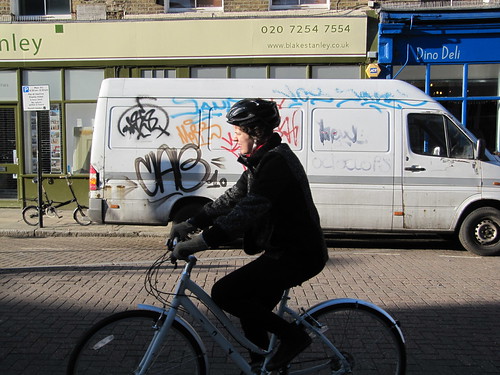
y o u b i k e l o n d o n; Becky from Blackheath


Name / age?
Becky, 29.
Where do you live / ride to?
I live in Blackheath. I ride to and from work in Tower Hill every day, use my bike to get around central London and ride around Blackheath and Greenwich on a weekend.
What do you ride?
Harry, an old mixte bike reconditioned by Lunar Cycles in Kentish Town. The frame is old, but the paintwork and all the fittings are new. I also have a Brompton called George.


How often do you ride?
Every week day, and most weekends.
Helmet or no helmet?
Always a helmet. Anything I can do to make cycling on London’s streets safer.
What's your primary reason for cycling?
Because I love it! It’s nice that it saves me money and keeps me fit, but even if it didn’t I’d cycle anyway. There’s no better way to get around London.
Least favourite aspect of cycling?
Living in fear of an accident. I had a collision with a white van a couple of years ago and smashed my wrist, and now I find it hard to trust other road users.
Most favourite aspect of cycling?
That getting around is a pleasure, not a hassle. It’s lovely to enjoy my commute. I get to work feeling fresh and awake, and my ride home helps me wind down at the end of the day. I never felt like that when I took the train.
What do you never leave the house without?
Two locks, lights, my helmet and gloves.
How many locks do you carry, and have you ever had a bicycle stolen?
Two locks – a chain and padlock and a D lock. They’re heavy, but I haven’t had a bike stolen. I also have my saddle chained to the bike frame and put a plastic bag over it whenever I leave my bike – a tip from Lunar Cycles to hide Brooks saddles from thieves!
What advice would you give to an aspiring cyclist thinking of cycling in London for the first time?
1. Just do it! It’s not as hard or as scary as you think.
2. Buy a bike you love and want to ride every day.
3. Cycle like no one can see you. Make yourself nice and visible and don’t hug the curb.
If you were Mayor of London for the day, what would you do to improve the lot of the London cyclist?
I grew up in the Netherlands where cycling was just the way everyone got around. Every road, even major ones, had a separate cycle path tucked along by the side of it. And they worked. I went everywhere by bike; everyone did. Cycling wasn’t an afterthought but an integrated and important mode of transport. If the Mayor of London really wants to make a difference to London for cyclists, this is how he needs to think. He has to stop shoehorning cycling into what already exists. Make proper cycle lanes. Put decent bike parking everywhere. Make it easy for people. I’d also like to see more normal, comfortable cycling clothes for women, but the Mayor probably can’t do much about that!


Share |

101 reasons to love cycling in London #30; it makes you poo better!

We're not afraid to 'go there' on i b i k e l o n d o n; there's no subject too squeamish, no story too scatological to escape our attention.  Choosing an appropriate picture for this particular blog post might be a challenge, but we're not afraid to try...

You heard it here first; cycling makes your poo nicer.  Or rather, riding a bike can help to boost your bowels.  “Physical activity helps decrease the time it takes food to move through the large intestine, limiting the amount of water absorbed back into your body and leaving you with softer stools, which are easier to pass,” explains Harley Street gastroenterologist Dr Ana Raimundo.


In addition, aerobic exercise accelerates your breathing and heart rate, which helps to stimulate the contraction of intestinal muscles. “As well as preventing you from feeling bloated, this helps protect you against bowel cancer,” Dr Raimundo says.

Chris Hoy. Built on Bran Flakes and obviously in the rudest of colostomic health.

So in addition to nicer poo, and potentially avoiding the Big C, trust me, your co-workers will thank you for it; they have to share that company bathroom with you too, you know.

No one likes to have an uncomfortable time on the toilet, and with cycling being the fastest way to get around town it seems that bicycles have more than one way of keeping you regular.  It's just number 30 of a 101 reasons to love cycling in London!

Share |

Bike Pride! (or what the gay rights movement could teach cycling)

There’s been lots of discussion online recently about the best approach towards growing cycling for the future. Opinions have varied hugely; some believe we have to do all we can to protect existing cyclists’ rights and to look after those who currently choose to get out there by bike. Others have stressed the importance of the potential market for cycling and how we must bring about conditions which will make cycling possible for everyone, instead of hoping that anyone taking to two wheels will simply endure the current status quo. Some are focussed on commuter cyclists whilst others want more everyday widespread ridership. Some are worried about potholes, some about child safety, some fear that their local velodrome is falling apart while others still are looking for the right conditions for a long distance cycle tour.

In recent online debates about the establishment of the Cycling Embassy of Great Britain, there’s been somewhat of a “my way or the highway” undertone from both sides. Carlton Reid, on his bike blog Quickrelease.tv believes that cycling is at risk of splintering, of its message becoming diluted, garbled or even watered down by the creation of another voice for cycling. He believes that in order to succeed, ‘cyclists’ must all pull together in the same direction.

This is where I believe cycling campaigners are missing a trick here in the UK. As my opening paragraph shows, cyclists are a diverse bunch with disparate interests, and rightly so. Some people I know who cycle do so because they believe they are helping to transition to an oil-free society. Others who I know couldn’t give two hoots about traffic reduction if it would impede on their ability to drive, and likewise there are plenty of cyclists I know who care less about their right to ride on all roads and more about creating conditions which they believe would allow their children to cycle safely from one side of town to the other. To expect all of us to work together to the same detailed aims and in the same direction is futile; no one campaign group or aim is going to please everyone on two wheels and risks alienation and inertia by attempting to do so.

If you will indulge me, I’d like to take you on a little social history lesson. Bear with me, as I am certain that similarities and lessons to be learnt will soon become apparent.

Being gay in 1960s Britain was not a particularly comfortable or attractive experience; it was not till 1967 that being gay was even decriminalised. General social attitudes were hostile, gay people were perceived as an odd minority, and if you had any kind of need of recourse to the law you were not guaranteed an even-handed experience, or even for the law to see your side of the story at all. There were, of course, just as many gay and lesbian men and women in the ‘60s as there are today, but many stayed ‘in the closet’ choosing to marry and act out straight lives because the alternative was so wholly unappealing, not to mention terrifying. Amongst gay people themselves there were those who advocated for a quieter, inconspicuous existence for fear that pushing too hard or rocking the boat might lead to harsher enforcement of anti-gay laws and a reduction in any hard won tolerances, no matter how minor those tolerances might be.

Starting to sound familiar at all?

Things came to a head in New York, where America’s gays and lesbians lead an equally unpleasant existence, in June 1969. Any gay bars or nightclubs were strictly illegal and very underground. One such bar was the Stonewall Inn. After a series of Police raids, public ‘outings’ and a general atmosphere of oppression, the gays fought back. An ill-conceived and poorly managed raid on the bar on the night of June 28th rapidly turned into a riot. Gay men and women, drag queens and transvestites took to the streets claiming ‘enough is enough’. People poured out of adjoining bars and the riot turned in to an all-out pitched battle between gay people and the Police; as news spread around the bars and street network of New York more and more people came out to join the protestors, and riots raged for several nights. For the first time in Western history gay people stood up for their rights, and literally fought for them.

The Stonewall Riots in New York lasted several nights.

Now, I’m not advocating that cyclists start a riot anytime soon - I’m not convinced that it would help our cause - but the Stonewall Riot was a ‘touch stone’ event, and what happened next is what is really interesting.

Even before the advent of the internet age, good ideas spread fast. Within six months two gay right advocacy groups had formed in the United States of America and the first ever ‘Gay Pride’ marches took place exactly one year later in Los Angeles, Chicago and New York. A gay rally was held in London in June 1970, and the first Pride March in 1972. Sydney’s Mardi Gras followed in 1978. Fast-forward to today; in 2010 an estimated one million people took to the streets of London to celebrate Pride, and Mardi Gras is worth an estimated 30 million dollars to the Australian economy. In the UK nearly all legislative hurdles to LGBT equality have now been overcome. It is arguable that this would not have been possible without the Pride movement.

The first gay pride march in London

Just as in cycling, there is a broad diversity of gay people with widely differing needs. Some gay people were concerned that they were serving in the military illegally, and lobbied to change the law on that front. Others had concerns about immigration rules which discriminated against multi-national gay couples, whilst others still had worries about hospital visiting rights, wills and probate, adoption and family rights or civil partnerships. The list of hurdles that have been overcome is substantial; with successes such as adoption or immigration rights the success has only affected a small minority of gay people. If each of these ‘minorities within a minority’ had lobbied the Government alone they’d have struggled much longer in order to achieve their goals. However, by participating in Pride they could approach the law makers by demonstrating they were part of a much larger and more powerful voting block. This has been the legacy of Pride; legislative changes which affect a small amount of people but which are important none the less have been secured with the back-up of a million people in the street. Those who wanted adoption rights marched in support of those who wanted to serve openly in the military and vice versa. Solidarity won the day.

As I’ve mentioned, cycling is already represented by a number of different campaigning groups with different aims. Some people want to build more bike lanes; some people want to increase the budget for cycle training. Some of us want to see money spent on developing sports cycling; others still want to improve the lot of cycling commuters. Since the abolition of Cycling England our campaigns must each negotiate with the Government one by one. Separately they have a few thousand members here, or a few thousand members there. No one campaign group is big or powerful enough to be able to go Parliament with a consensus for cyclists. Meanwhile, our Government is busy dismantling Cycling England, dicking around with the Cycle To Work scheme, giving drivers cash for scrap cars and offering huge subsidies on electric motor. In the Courts the judiciary is still letting dangerous drivers get away with murder and our city planners are certainly not ‘thinking bike’ as they design a massively expanded M25.

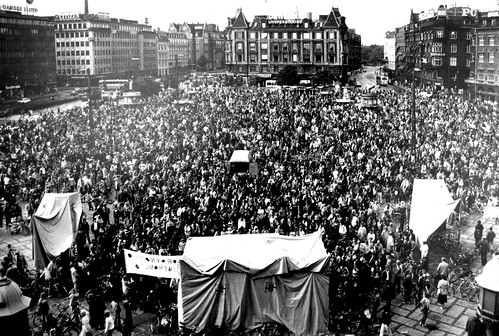
Cyclist Demonstration on City Hall Square 1970s - Copenhagen
Cyclists demonstrate for better conditons for bicycle, Copenhagen City Hall square, 1970 via Copenhagenize

Whilst we all want different things for cycling, and our diversity is a strong point, when it comes to having our voices heard it is also our Achilles’ heel. It is too easy for our Government to fend off all the minority voices within cycling by getting them to fight for scraps (like the recently established Sustainable Travel Fund). Despite our diversity, however, there is one thing we all agree on and that is that the Government should ‘Put Cycling First’ in all that it does. It’s great that we have different cycling campaigns for different types of cyclists, but perhaps they could learn something from the Gay Pride movement and once a year have all types of cyclists come together to show strength in numbers and solidarity in their similarities. None of our cycling campaigns ought to claim to be the primary voice of cyclists, and neither should they dismiss those which don’t agree with their own ideals. However, I can’t help but feel that British Cycling, or the CTC or even the Cycling Embassy of Great Britain could get the Government to sit up and take notice an awful lot more if they represented not their few thousand individual members but could say they were speaking as part of the million cyclists who had recently taken to the streets...

Maybe it’s time we had a Bike Pride ride of our own? (But please, no Kylie Minogue...)
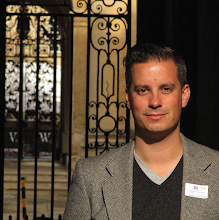
y o u b i k e l o n d o n; Dan from Croydon

Name / age?
I'm Dan Benson. I'm 39.
Where do you live / ride to?
I live in NW Croydon and I work near Earls Court.
What do you ride?
A Geoffrey Butler Audax, a steel beastie I’ve nicknamed ‘the FUCIM’ (Fabulous Urban Commuter and Ironman Machine).
How often do you ride?
Every weekday, with the occasional café ride with friends on a Saturday.

Helmet or no helmet?
Always a helmet, it’s saved my bonce from more than a couple of dents over the years. That said, I can understand the reasons for choosing not to wear one.
What's your primary reason for cycling?
It used to be primarily for fitness, but I use running to maintain my weight now. Cycling is purely Point A to Point B – cheaply, quickly, efficiently. The nature of cyclommuting means that I can guarantee that tonight, without a puncture (touch wood), I will reach the childminder’s in no more than 45 minutes.
Least favourite aspect of cycling?
Negotiating queues of cars, riding in the dark.
Most favourite aspect of cycling?
The point where you and the bike are one, there’s no effort, and you become merely a pair of eyes floating above the road.
What do you never leave the house without?
Basic tools, a couple of spare tubes talc-ed up and ready to go, and eyes in the back of my head.
How many locks do you carry, and have you ever had a bicycle stolen?
I have a D lock, and I’ve never had a bike stolen (again, touching wood). I tend to lock up in obvious places, detach and lock the front wheel to the frame and back wheel, and take its quick-release skewer with me. I once had a light stolen, so I take those and my speedometer off too.
What advice would you give to an aspiring cyclist thinking of cycling in London for the first time?
Always look around you. Get used to looking behind – the ‘lifesaver look’ – especially when pulling out or overtaking. If you’re a driver, drive your bike defensively; if you don’t drive, brush up on the Highway Code. Never overtake a lorry or a bus on the inside. Ride in the moment – forget any time goals and focus on what you are doing now (I find if I focus only on the few yards about me, without thinking about the rubbish junction ahead or the inattentive driver behind, etc., I often arrive quicker than anticipated). And remember to breathe occasionally!!
If you were Mayor of London for the day, what would you do to improve the lot of the London cyclist?
Infrastucture. I’d build new, Dutch-sized lanes and I’d take away lanes from automobiles and give them to cyclists, for two reasons: 1. More cyclists, less congestion and 2. Traffic flow studies I’ve seen recently that bear out the idea that restricting car routes has the effect of improving traffic flow, when you’d think the opposite. I used to be an advocate of ‘vehicular’ cycling but now I’ve been swayed to the idea of segregating facilities. If done properly and not as a token gesture (like today’s narrow and badly-maintained ‘paths’) it could have a revolutionary effect on London’s roads. And in 15 years, no one will remember it being any different. Given another day as Mayor, we could talk about restricting lorries to outside the North and South Circular – or even beyond – and a blanket 20mph speed limit. As a driver and pedestrian as well (get me, a triple threat!) I think all these things would do nothing but benefit our lives, making them safer, cleaner and maybe even a bit more time- and cost-efficient.


Share |

101 reasons to love cycling in London #29; get some sleep!

Today's blog post seems appropirate seeing as I have recently been woken up several times in the night by my better half stealing the duvet...

Sometimes it is hard to let go of the day and get your head down for a good night's sleep, especially if work is stressing you out or things at home are driving you round the bend.  We've all been there, at one point or another, our heads on the pillow and our eyes wide awake, willing ourselves to sleep but to no avail.

IMG_4465

IMG_6420

Researchers at Stanford University School of Medicine in America have found in a study that by encouraging a group of 55 to 75 years old to cycle or engage in similar light exercise for 20 to 30 minutes every other day, that the subject's sleep time was increased by an hour and it took half the time for them to fall asleep.  This makes perfect sense in my mind; getting rid of oxygen build ups in your muscles, tiring yourself out a little and clearing your head with gentle repetative pedalling must be a sure way to improve the quality of your Zzzzs.

This, of course, is in addition to all the other benefits that cycling can bring you.  We've mentioned before how cycling has been proven to help keep you sane, exercise your grey cells, raise your heart rate (a good thing!), and still save you a fortune in Congestion charging or Tube fairs (the first reason to love cycling, which we featured all the way back in October '09)

It starts to make you wonder why more people haven't started riding already...

Getting a good night's sleep? It's just #29 of a 101 reasons to love cycling in London!

Share |