Goodbye ibikelondon blog, hello Strategic Cities


After six years of incredible cycling experiences, ibikelondon blog is coming to a close. I want to highlight where I have been, where I am going, and to say thank you for coming along for the ride.

I began writing about riding in London in 2009. I hardly expected then ibikelondon would become such a big part of my life.  My first post had just ten readers, and included a photo of me participating in a Skyride on a very rusty, very purple second-hand bike. Over 500 blog posts later and thankfully my wheels have improved - and so has London.

If you know me via Twitter you’ll have seen clues that change is coming.  Starting any new venture is daunting, but I’ve been preparing to make this move for a while.  I worked hard on building this, I’m excited to share it with you, and I hope you’ll be as excited using it as I have been creating it.  @markbikeslondon will shortly become @StrategicCities, and you’ll be able to find me at my new website; strategic-cities.com 

 With some of you on Blackfriars Bridge in 2011.

I’ll still be looking at how people travel, and how cities can become increasingly efficient and liveable, but my focus will be wider than just the bike.  I’ve come to realise bikes are the “canary in the coal mine” of liveable cities, and there are many issues – childhood freedom, planning, obesity, transport – which are all part of the same urban matrix we call home, and which deserve further scrutiny.

StrategicCities will also see me start a new career.  I’ll soon be delivering training for urban professionals and communications analysis for city leaders.  Why?  I’ve been fortunate enough to work in the media from the inside - as well as influence it from the out - and my experience has shown me that the way we convey messages is more and more important in delivering difficult projects. You only need to look at the vociferous – and frequently hysterical – anti-bike lane sentiment we’ve experienced in London.  Communicating well in a difficult environment is not a skill which comes naturally to most, but preparation goes a long way in helping to navigate that minefield.  My first web-based training seminar; “Achieving Change In A Hostile Media Environment” takes place in May and registration is open.  If you want to keep up to date about further events and training then you can sign up to the Strategic Citiesmailing list, or connect with me on LinkedIn.

ibikelondon has given me incredible opportunities. I’ve given evidence at Parliament, lectured at the National Conference for Urban Design at Oxford University and written for national newspapers about cycling and cities. I even appeared on Newsnight and Russian state radio.  Blogging takes (a lot of) time, effort and patience, but I’ve had fantastic experiences by bicycle along the way as well; from riding through backstreets in Shanghai, to chasing the Tour de France through Belgium in a helicopter.  More amazing things than I could ever have imagined when I wrote that first post back in 2009.

There have been tough times, too.  I’ve stood beside dangerous junctions as grieving relatives mark the site of a loved one’s death too many times.  Too often I’ve written about poorly designed, poorly driven lorries in London, and the fatal problems they present.  And too often I’ve written how someone has died on an appallingly designed stretch of road which authorities had been warned in advance would lead to fatalities.

Two terrible weeks in 2013 saw six London cyclists lose their lives in rapid succession on our roads.  Those missing riders marked a shadow for a long time afterwards, when the bus seemed more appealing than the bike, and more likely to deliver me to work alive.
IMG_0022
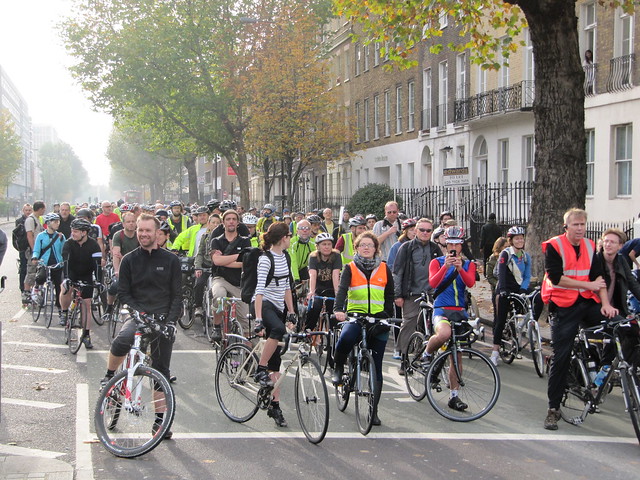
The "Tour du Danger" around London's 10 most dangerous junctions for cyclists.  Here the ride is seen outside TfL HQ on Blackfriars Rd - now the site of the north / south cycle superhighway.

London’s anger at those deaths, and others, helped to spur our cycling community on.  This helped to achieve genuine political commitment and action from Mayor Boris Johnson.  Protests on Blackfriars Bridge and around dangerous junctions lead to really meaningful change.  Hours of meetings with politicians and their advisors helped to guide policy and new street designs.  But it should never have taken so many deaths for this process to start.

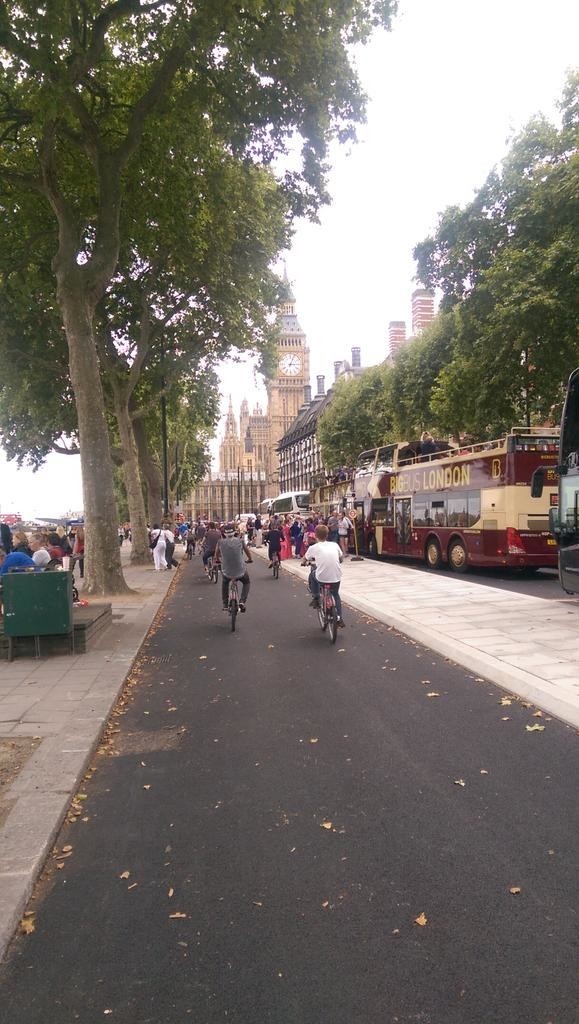
Now we’re seeing the result of that commitment with hard-won bike tracks and re-designed junctions appearing across London, most contentiously along the Embankment.  Credit where credit is due; the North / South and East / West Cycle Superhighways is going to change the way we cycle in the city, and for good.

But resistance was ferocious, well-organised and – in the case of the taxi lobby and CanaryWharf Group – incredibly well-funded.  Those same opposing forces are still out there, making their backwards-thinking grievances an issue for the next Mayor of London. 

People who want a liveable London must remain focused (and angry), and Mayors must not be afraid to be bold.  Do not underestimate the change that committed citizens together with committed leaders can bring about.

I recommend you to the London Cycling Campaign and their Sign4Cycling Mayoral target, and to my fellow bike blogger Danny, at Cyclists In The City, who so often has been “a partner in crime” in campaigning escapades.

So it’s goodbye ibikelondon blog, and hello to exciting, new Strategic Cities.  Through the years what has often kept me going have been the wonderful interactions – both online and off – with people like you who have read my words here.  Thank you.  I hope you’ll come with me on my new adventure, and that there are many safe and wonderful bike rides ahead for us both.

Share 
Cyclists are out of control! (And why that's okay)


This compelling animation by Lucas Brailsford (whereislucas.com) looks at the high level of "non conformist behaviour" among cyclists in the Netherlands.  It's not the sort of narrative you'll usually hear from cycling campaigners - it is hard to be persuasive with Governments and decision-makers if you're also prepared to admit that the people you're championing regularly jump red lights, ride home drunk or generally behave 'badly'.

There's a concept in the Dutch legal system of tolerating lightly illegal behaviour, or changing the framework so that it is no longer illegal.  Dutch policy famously allows euthanasia, has legalised prostitution and the use of marijuana, and was the first country in the world to introduce gay marriage.  The pragmatic approach seems to be "tolerate things, rather than prohibit them, force them underground and loose control."

When a cyclist barreling down the pavement in the dark nearly knocks you over this pragmatic approach to tolerance might seem frustrating.  Likewise if a prostitute sets up (knocking) shop next door.  There's no doubt that on an individual level these things could be highly frustrating, or even dangerous, but collectively society just doesn't see it as such a big deal.

IMG_4331
Criminal tearaways, no doubt about it...

But this concept of 'turning a blind eye' is not as foreign as we might think.  Watching Lucas' video from an emerging cycling culture is a real eye-opener because the non conformist behaviour of some cyclists seems a bit wild.  But if a similar video was made here, about our prevalent transport users, you'd find the same.  Non conformist behaviour among motorists includes speeding, parking illegally, driving drunk, riding without insurance and knocking down other road users.  You don't believe that as many people in cars flout the law as regularly as cyclists ride drunk in Amsterdam?  Just try driving around your local town without once exceeding the speed limit and see how your fellow road users like it..


There's no doubt in my mind that good behaviour helps to encourage a literally civil society.  But in terms of fixing things, society only tries to resolve the problems it identifies as being a problem.  The cyclists of Amsterdam might seem to us to be a bit out of control, but when it comes to non-conformist behaviour I know which sort I'd prefer any day...

Share |
One road at a time, London is making cycling progress - and it will change everything!


London has been changing over the summer.  Whilst the city was on holiday, Transport for London's contractors have been out in force building bike infrastructure on a remarkable scale.  Boris Johnson confirmed he would go ahead with his new Cycle Superhighway plans in January of this year, and now we're seeing the first results on the road.


Big construction projects inevitably cause short-term congestion whilst underway, but it is worth remembering the astonishing level of support for the new Cycle Superhighways and the long-term gain they'll bring.  The nine-week public consultation on the plans saw an overwhelming 21,500 responses from individuals and business organisations, with 84% in overall support of the plans. A YouGov opinion poll taken during the consultation found 73% of Londoners supported the Cycle Superhighways, even if it meant taking a lane of traffic away.  Over 160 major employers, including Deloitte, Coca Cola, Unilever and others came out in support of the East / West Cycle Superhighway which is currently being built on the Embankment.  


A quick ride up the finished section of the East / West Cycle Superhighway along the Embankment, courtesy of @CycleGaz

There has been opposition, of course, namely from the old guard of the taxi lobby (hello, LTDA, you scoundrels!) so much of which has been thinly-veiled anti-cycling sentiment.  Construction of the Crossrail train project has seen entire streets closed off in central London for years (as opposed to just months), but no one seems to be complaining about that...


Vauxhall Bridge (2 way track) via @AsEasyAsRiding and segregation wands on the Whitechapel Rd (apologies to whoever I saved this photo from, I can't remember who it was!)

The changes afoot are not just along the route of the East / West Cycle Superhighway.  At Oval, CS5 is being upgraded to provide full segregation, including around the terrifying Vauxhall Gyratory and over Vauxhall Bridge. In East London the killer CS2 is also getting an upgrade, with full or semi-segregation being introduced on a route that was previously literally just dirty blue paint and a lot of wishful thinking.

 Newly Hollandised Waltham Forest village!  Just look at all that anti-driving economic activity going on(!)

Cycle tracks alone can't change a city in to a bike riding paradise.  You also need balanced residential zones where local streets are set free from the tyranny of rat running and speeding traffic.  The Waltham Forest Mini Holland is just such a project and is now beginning to take shape - but only because of the diligent work of local residents in the face of vociferous NIMBYs who wish to retain their right to drive 150metres to the local shops...  There's a street party on Orford Rd today (Monday) from 3PM to celebrate the completion of the first stage of the project, if you're in the area.

As the London Cycling Campaign rightly point out, there are growing pains which need to be resolved in some places, and that's to be expected with innovation and change.  Meanwhile, progress presses ahead with construction of the North / South Cycle Superhighway in central London chalked up to start in autumn (check here for details)


But with summer almost over and the city's streets transformed whilst everyone has been away, the pace of change seems unstoppable.  The old "blue paint and optimism" superhighways - despite their very obvious limitations - still saw a leap in rider numbers of a minimum of 25%.  When these new safe and separated routes open to the public we'll see a torrent, a deluge, a flood of new riders using them, and it's going to change London completely!

Share |
Get ready for racing on Regent's Street as a new Tour of Britain route comes to London!


It's no secret, I love the Tour of Britain!  I like the smaller scale of it compared to the Grand Tours of Europe, the opportunity for emerging riders to taste success, and of course the route through green and pleasant Great British Countryside.

But I've always felt the final stage - right here in London - has always been a bit of a let down.  Yes, you get the finish line photo of racing in front of Buckingham Palace, but the rest of the day is spent riding up and down the Embankment and Upper Ground which makes for a dull stage that is not very exciting for spectators.


So I'm thrilled to see that this year's final stage has a new route in our beautiful capital - and it's all because of London's everyday cyclists!  Because of construction work on the Embankment to build the new East / West Cycle Superhighway the Tour can't ride there.  So in 2015 it is adopting a new route, which promises fast down-hills on Haymarket, tight corners around Trafalgar Square, and racing up and down magnificent Regent's Street which is, in my opinion, the most beautiful street in the world (ESPECIALLY when it is closed to traffic!)

The final stage comes to London this Sunday the 13th of September, heralding the end of a fantastic summer of cycle racing.  The start and finish line is just south of Piccadilly Circus, and the riders will make a three-pointed loop of Regent's Street, Whitehall and the Strand, passing some of London's most famous buildings and attractions along the way.  It is free to spectate and makes for a fun day out for all the family.  The riders are fast, but you might even catch a glimpse of favourites Sir Bradley Wiggins, Mark Cavendish, Alex Dowsett and Andre Greipel, or even local boy Tao Geoghegan Hart from Hackney racing for British Cycling's development team.

Seeing as the stage is hosted and paid for by Transport for London (did anyone check the balance of the cycling budget recently?) Londoners might as well get their money's worth and have a nice day out of it...

All the details of the London stage can be found on the Aviva Tour of Britain website here.  The beautiful picture of Piccadilly Circus featured in this post is by artist Will Barras and was specially commissioned by cycling website Rouleur, where it is available for purchase.

Share |
"We all cycle" - the rise and rise of proud cycling cities


I'm spending the summer in the Netherlands, and have been learning so much about cycling in their cities.  What has become clear to me is that Dutch cities are increasingly competing for a share of the visitors who come here to learn about the Netherland's cycling and planning culture. Utrecht, host of this year's Grand Depart, is not alone in this - note how this incredible video touting their cycling achievements is presented in English rather than Dutch and really tries to "show off" the city as a beautiful place to visit (which it is, I hasten to add).


I think this is an interesting phenomenon for two reasons; firstly the internet is being recognised by cities as an effective tool for reaching and inspiring many people around the world, getting them excited and clearly demonstrating exportable concepts.  There's also a clear attempt here to attract high-spending tourists who are on learning-based trips.  In short, visiting cities to find out how they work has become a mini industry of its own!
What do you think? Have you spent time visiting cities in order to learn and find out what you can do in your own city? Do videos like this make you want to visit somewhere more? Could pro-cycling messages like this help to make the case for cycling in the city where you live?
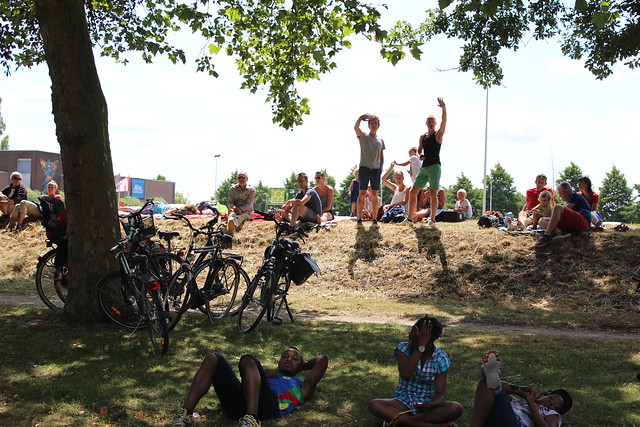
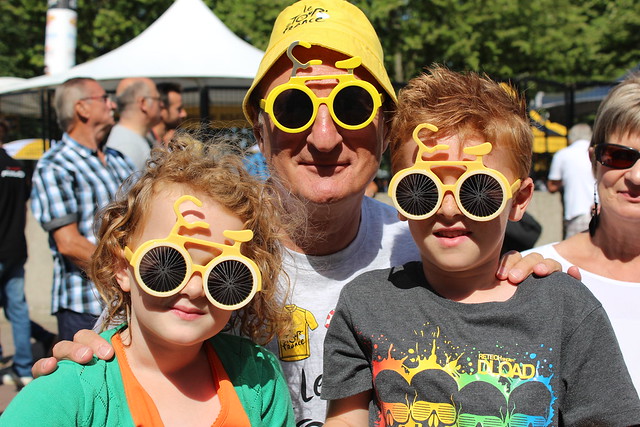
For more information on cycling in Utrecht, visit utrecht.nl/we-all-cycle/

Share |

Bike bans in pedestrian zones make no sense, but not why you think


Last week I visited the Dutch city of Zwolle, the Netherlands City of Cycling in 2014.  It's a pretty, historic city surrounded by countryside and has a pedestrianised heart.  But what I saw there made me reconsider banning bicycles from pedestrian-only areas, but not for the reasons why you might think.

Many cities - both in the UK and elsewhere - have pedestrian zones where people using their feet to get around can relax in a safe environment where they don't need to be worried about being knocked down by speeding cyclists, or any other traffic for that matter.  Where there are lots of people, especially around shops, this has always made sense to me.

The West Country town I grew up in had a large pedestrians-only shopping area, where you were expected to lock your bicycle on the perimeter and walk in.  Even as a young man I remember being approached by security guards and given a telling off for pushing my bike through.

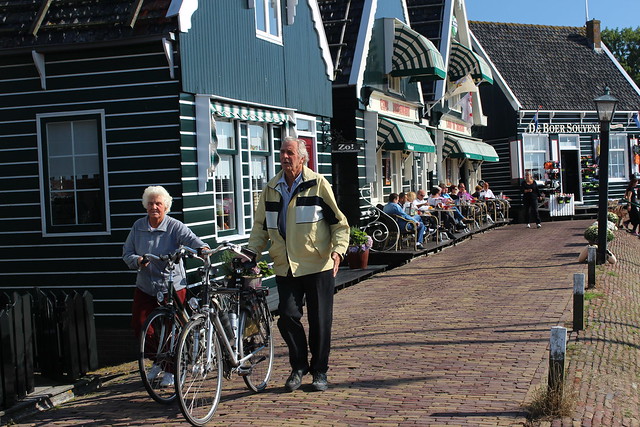
Things were different in Zwolle.  I'm not sure if bikes were technically permitted but I saw many in the pedestrian area.  A few were being slowly cycled to available bicycle parking, but the majority of them were being pushed.  I saw two friends; one woman on a bike and one man on foot, making a journey together through the city centre (photographed, below)  Would their journey have taken place if a strict bike plan was in place?

An older woman was using her bicycle as a shopping trolley, filling her basket with goods she brought as she pushed the bike from store to store.

I remember hearing Danish urbanist Jan Gehl recount a story about his mother who, when she became too frail to cycle, would still walk with her bicycle - it was her dignified access to mobility, without having to revert to using a walking frame.

Pedestrians are important, and in pedestrian areas should always come first.  As with much in life however the situation is not black and white; people have a complex approach to their own mobility.  I wouldn't want to see cyclists riding at speed through shopping areas, or obstructing access with mountains of parked bicycles, but I realise there's more to bicycles in pedestrian-only areas than initially meets the eye.

P.S  For more wild and reckless behaviour like using a bike in a pedestrianised area, see this film by the City of Zwolle which features their Bike Director getting a backie from various residents - something which landed London Mayor Boris Johnson in hot water this week and for which he was slammed by the CTC! (Film in Dutch only, sorry!)

Share |

Why there’s more to successful cycle paths than just building cycle paths

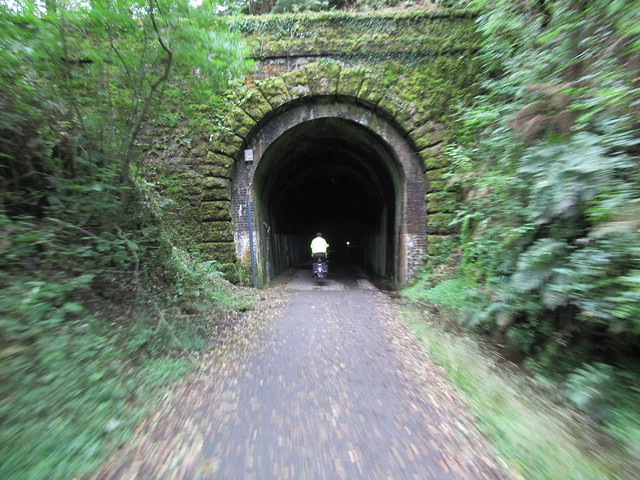
Wherever you are in the UK, you’re never too far from a so-called “recreational bike path”; a family-friendly cycle route separated from the roads and often built on converted railway lines.  Thanks largely to the work of the charity Sustrans these routes criss-cross the country.  Some are wildly popular, both with long-distance touring cyclists as well as with families out for a ride and a day out by bicycle.

IMG_7059

In previous discussions cycling friends of mine have denigrated these paths, describing them as “choked”, “slow” and in one instance “stuffed with nodders on bike-shaped-objects.”  But I take a different view.  The Mums and Dad you find hitting these trails in the school holidays might not ride the best bikes, or even self-define as “cyclists”, but when it comes to rehabilitating the bicycle with the British public every journey counts.

In order to encourage adults to start cycling again (often for the first time since their teens) we need to make the experience as simple as possible.  What’s more, you shouldn’t have to make a large up-front investment before deciding you’d like to try riding a bike once more. And that’s where I think we are going wrong with our recreational cycle paths here in the UK.  It turns out there is more to building successful cycle paths than just building cycle paths.

Fun in the sun on the Venice Beach bike track, Los Angeles. 

On a recent trip to Los Angeles I was astonished to find that there - in the very heart of the world’s most car-sick city - was a resoundingly popular recreational bike path.  Running along the length of Venice Beach, the track itself was smooth, wide and separated from pedestrians.  It passed Venice pier, Muscle Beach and other interesting spots and on the Friday afternoon I visited it was packed with people of all ages cruising up and down on bikes.  Roller skaters, cycling ice cream salesmen and shady palm trees helped to lend a festive air.  We turned off the path and rode for a few blocks away from the beach to see if the whole district was a cycling nirvana, but found ourselves alone.  The people on bikes were stuck resolutely to cycling up and down on their safe cycle path.  I watched the riders, and started to think; what made this path such a success?

IMG_7900

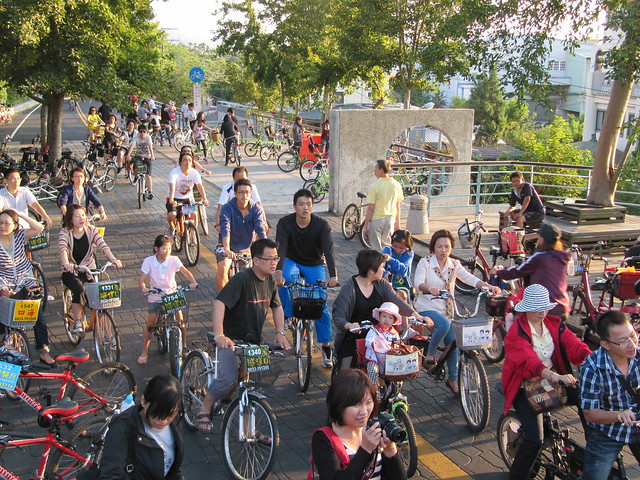
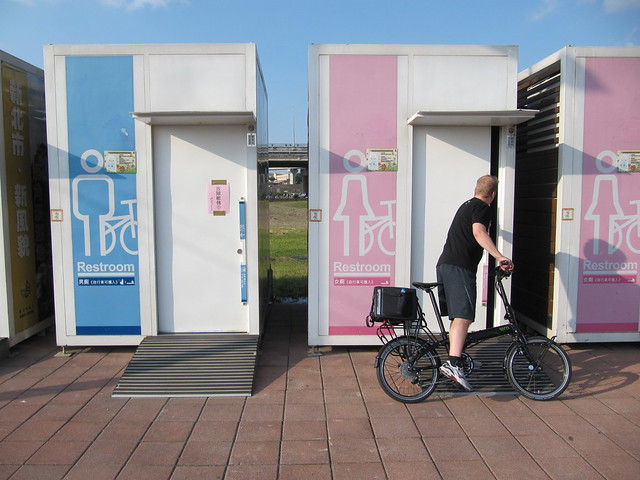
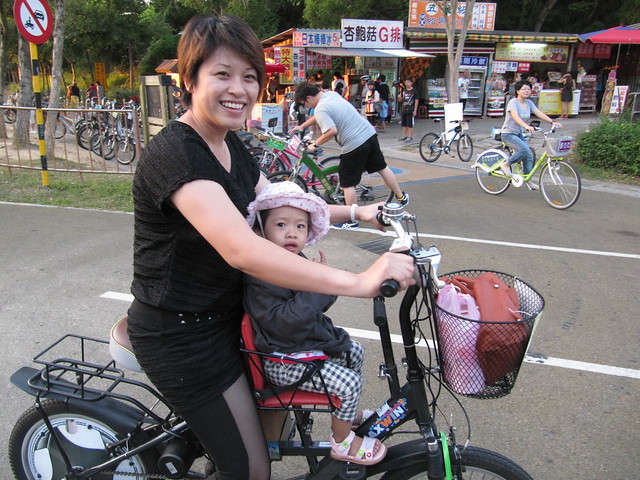
A few years ago I was lucky enough to cycle in Taiwan (check out this ride from the capital, Taipei)  In the city of Taichung the local government have converted a disused railway to create a cycling route which stretches for a number of miles along the river and in to the country.  There I saw whole families (some on only one bike!) out enjoying themselves for the day on hired bicycles.  There were tandems, and cargo bikes and bikes with baby seats.  There were electric pedal-assist bikes and bikes with sound systems and bikes which looked like small family cars.  The trails were packed with riders, stopping off at small track-side cafes for drinks and snacks or hiring another bike when they got bored with the other at one of the many hire shops.  They even had ride-in toilets so you didn't have to worry if you'd not brought a bike lock with you!  It turns out that the same amenities in Taiwan which make this path work are the same amenities you find in Los Angeles, and it’s what we are lacking on our British paths.

IMG_7288
Ride-in toilets for security conscious cyclists who don't have a lock. 

In Los Angeles all of the cycle hire stalls were run by the same business, meaning bikes could be dropped off at any point along the route.  If people got tired of riding they could simply drop off the bike without having to ride back, or they could do a one way journey with the wind behind them without having to contemplate a strenuous return trip.  The ice cream salesmen on bikes added a further level of amenity, whilst well-observed and safe cycle parking clusters were positioned at interesting points along the route meaning people could lock up their bikes with confidence.

IMG_8033
Small businesses selling food, drink and hiring out bicycles line the Taichung bike path. 

IMG_7036
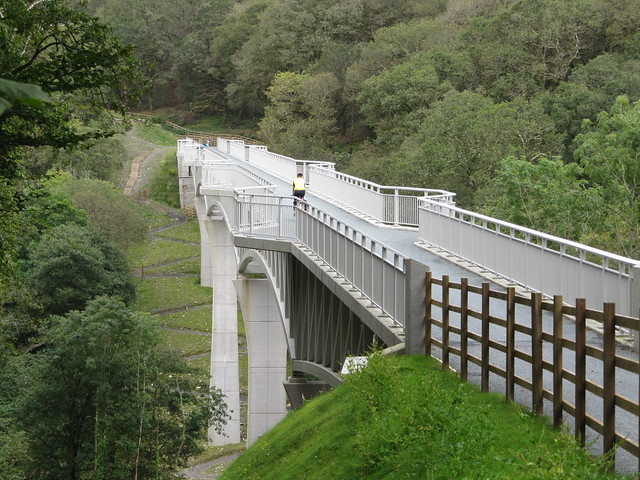
Gem Bridge, near Tavistock. Beautiful, and somewhat empty of cyclists.

In Taiwan, the bike hire was cheap and plentiful and once again right on the path itself so that the ride started in pleasure straight way.  On a recent trip to Devon I cycled on the impressive Gem Bridge, a beautiful structure which fords a deep valley and connects two newly-opened sections of converted railway line.  But in order to access the path from the nearest town, Tavistock, was a torturous route crossing main roads and down little alleyways.  It may not have the best eco-credentials, but people need to have “park and play” access to these routes in order for them to be a success.

Of course, these successful cycle routes had all of the usual things you’d expect, such as smooth surfaces, good sign posting, and safe bike parking.  But there’s a role for business - such as bike hire and small cafes - in making better recreational cycle routes that we don’t utilise enough in the UK.  It helps to create jobs, keep money in the local economy and enable rehabilitating bicycle journeys for people who wouldn’t usually ride and need their bike served up on a plate.  What’s not to like?


Share |

Now that the Tour de France has left, what else can Utrecht teach us about cycling?


I'm on a summer trip, making a tour of Le Tour following the riders around Antwerp, Namur, and even riding with the peloton in a race car.  It's been a brilliant journey and now I am on my last stage, returning to the scene of the Grand Depart, Utrecht in the Netherlands, to see what this cycling city looks like once the pro riders have passed by.

IMG_5342

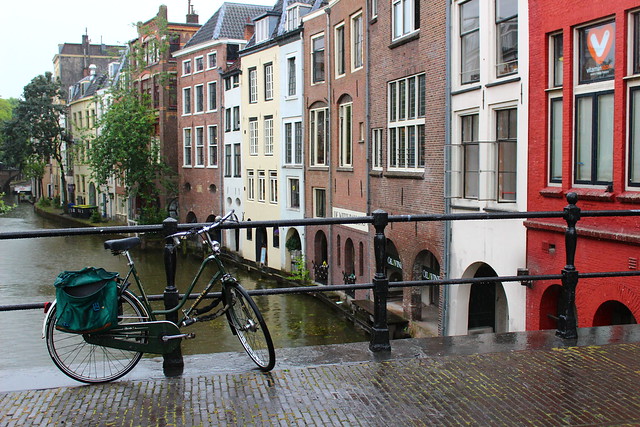
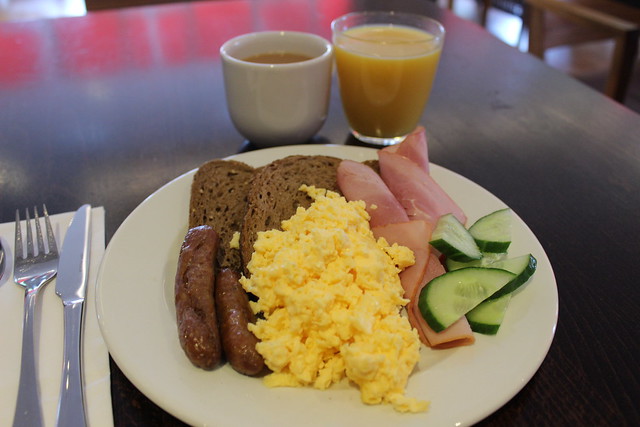
I've partnered with Ibis Hotels for this trip and all of the staff have been so friendly and helpful. Utrecht was the same; "Of course you can ride today", said the cheery receptionist "It takes more than a bit of rain to stop the Netherlands from rolling!" I looked out the window at the rain blowing in sideways and decided to fortify myself with the fantastic breakfast before I set off, grabbing the keys to a bicycle rented directly from the hotel.  The Ibis in Utrecht is just a five minute ride in to the city centre along a pretty canal lined by windmills and old town houses - not a bad start to my day, despite the weather.

IMG_5291
IMG_5296
IMG_5301

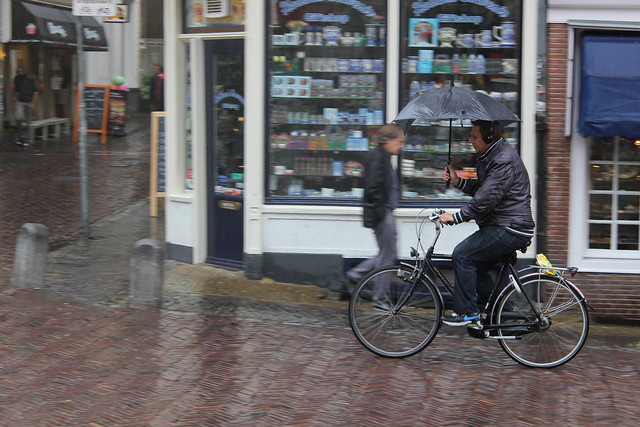
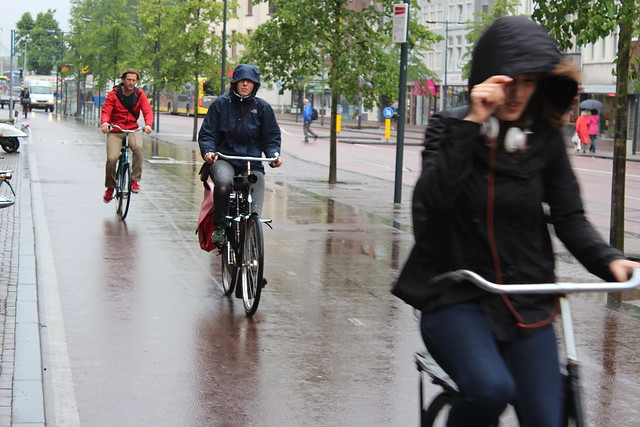
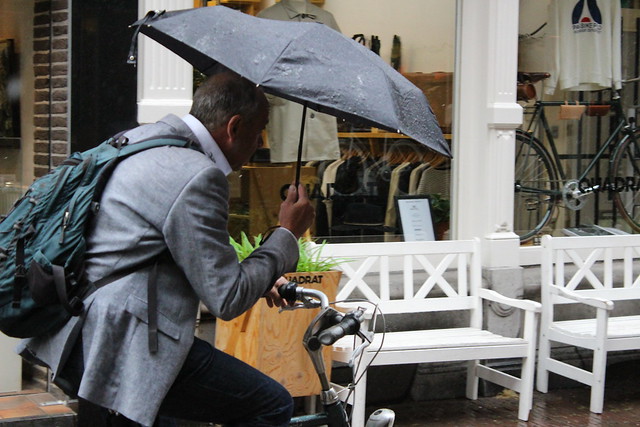
The clouds darkened and rain intensified, but this didn't seem to deter Dutch riders who cycled on regardless.  Rain coats were pulled out of bags, hats were donned and umbrellas were lifted, making it immediately apparent I was in a totally different cycling situation to the UK.  You could ride down the Tottenham Court Road in London at peak time in the rain whilst holding a big umbrella if you wanted to, of course, but I wouldn't recommend it.  Here, things are different.

IMG_5346
IMG_5312
IMG_5343

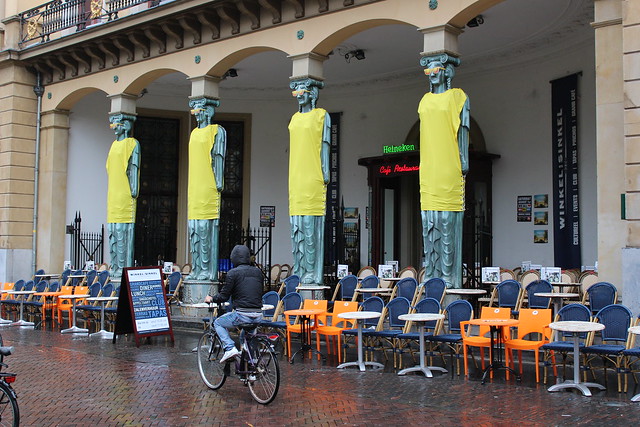
Hints that the Tour de France had recently been this way were everywhere.  Shop windows were decorated with bicycles, flags were hung over every street and a statue of the city's most famous daughter - Miffy the bunny - had been put up in the tourism office. Naturally, she was riding her bicycle.  The facade of the popular cafe Winkel van Sinkel was decked out in yellow jerseys, too.

IMG_5353

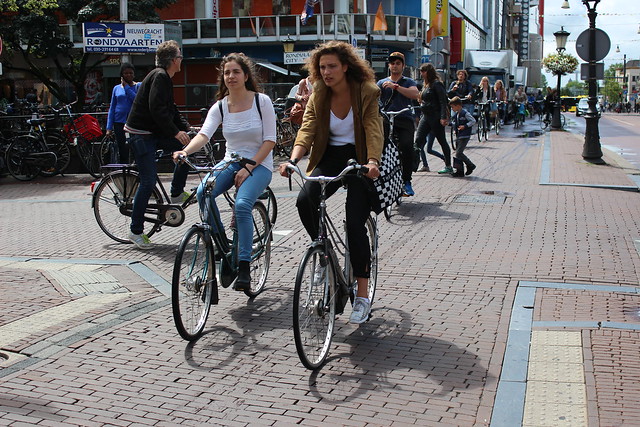
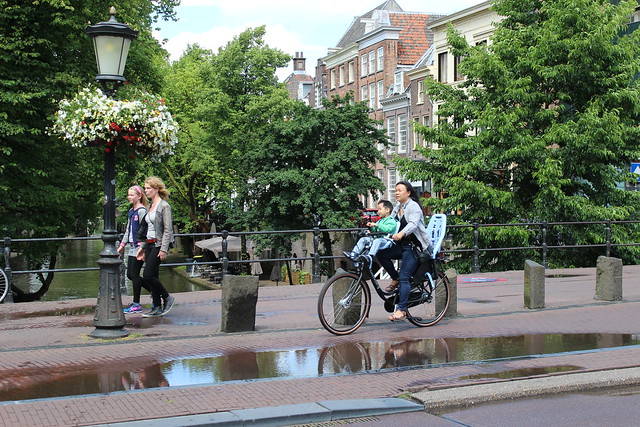
But even though the pro riders had left, there's still a festive cycling feel to Utrecht that stems from the many thousands of people on bikes who cycle here every day.  I saw small children being carried on their parent's bikes, middle-sized children riding alongside on their own, and teenagers enjoying their mobility and being totally independent.

IMG_5385
IMG_5379
IMG_5449

I have no doubt that all that freedom stems directly from the excellent cycling infrastructure which you'll find all over the Netherlands, but what I was particularly impressed by was how the Dutch don't sit on their hands, but are always seeking to improve things.  I went for coffee with Mark Wagenbuur from the brilliant Bicycle Dutch blog.  He took me out to a junction on the edge of the city, smiling proudly all the way, that we had last visited together in 2012.  Back then, he had described it to me as 'the most dangerous junction in Utrecht' and I was inclined to agree.  Cyclists were forced to merge with a lane of fast-moving traffic turning right, and to ride together alongside a metal fence for about 100metres.  Just three years later and the situation has entirely changed.  Engineers have 'found' the space to continue the cycle track safely through the junction, and the right turning traffic simply waits in a lane of the rest of the road.  Of course, it's not a question of 'finding' space at all but simply a choice of what to do with the space that you have and who to allocate it to.  

IMG_3886

The same junction, above in 2012, as it appears today, below in 2015. Notice how space has been 'found' for the new and safer cycle track without taking the pedestrian's pavement away.

IMG_5360

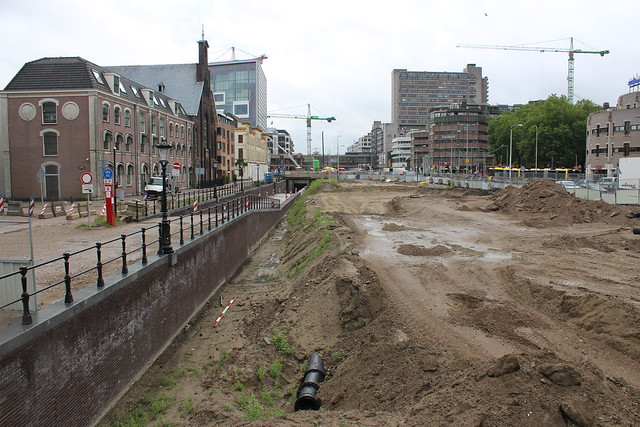
I had been impressed by the new junction, but it was nothing compared to the building project which is nearing completion in the city centre.  When I first visited Utrecht the space in this photo was part of a multi-lane city ring road built in the 1970s.  All it did was create traffic congestion and bring more cars in to the city centre, where there was no room for them.  So the city planners decided to push the ring road further out of the city - to loosen the city's belt, if you like - to create more space for people.  

IMG_5356

The move has allowed for the total redevelopment of the train station, created space for a new shopping area and offices and very soon the dirt that you see in the photo will be removed and replaced with water, re-connecting two sections of the city's ancient canals.

IMG_5419
IMG_5405

At the new station the city's cycle racks are being refreshed and new bicycle parking areas are being built.  On Korte Jansstraat in the old town, a road which used to be clogged with two lanes of car parking has been re-surfaced in red bricks and the parking spaces moved away.  Rather than harming the businesses there, the streets were busy with shoppers and restaurants had laid out new tables and chairs.

IMG_5455

This is my third trip to Utrecht and each visit has left me with the same impression; that this is a city rapidly growing, improving itself, identifying the planning mistakes of the past and quietly getting on with rectifying them.  It's lively and packed with young people and University students.  Better still, it is easily connected to the rest of the Netherlands and Schipol airport by the fantastic national rail network.  Utrecht proved with the Tour de France that they know how to throw a good bike party, but if the world's cycling cities were in a race Utrecht would in the break away every day.  Why not make a visit to see for yourself?

Share 

Tour de France Stage 4: Citadelle de Namur, Belgium


IMG_5243

After riding in Antwerp and spending the day with the peloton, my tour of Le Tour continues, today bringing me to the Belgian city of Namur.  There was a huge gap between the break away and the main bunch, who crawled up the hot, dusty road to the summit of the Citadelle, where I captured this photo.

It was a hugely exciting stage on the cobbles and a dramatic win for Tony Martin.  Tomorrow I leave the pro-riders behind and return to the Netherlands to the host city of the Grand Depart, Utrecht, to find out what happens in a cycling city after the racing cyclists have gone.  Stay tuned!

Share 

In the thick of it. Today I found out what it's like in the middle of the Tour de France...


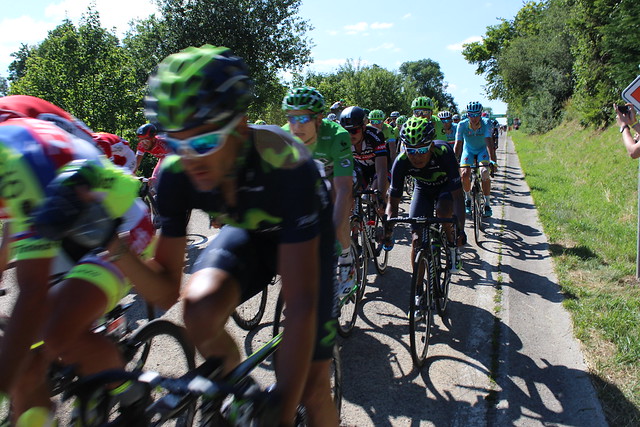
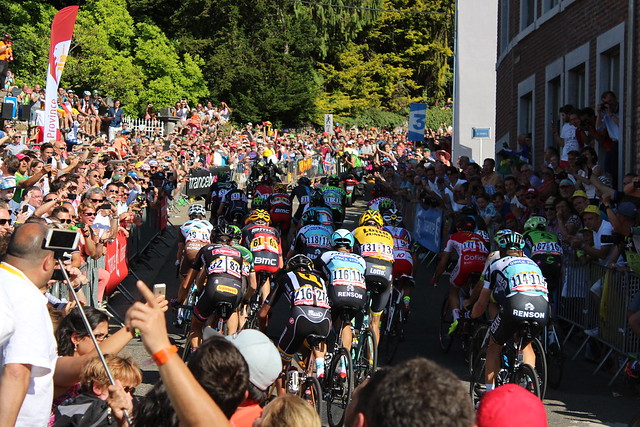
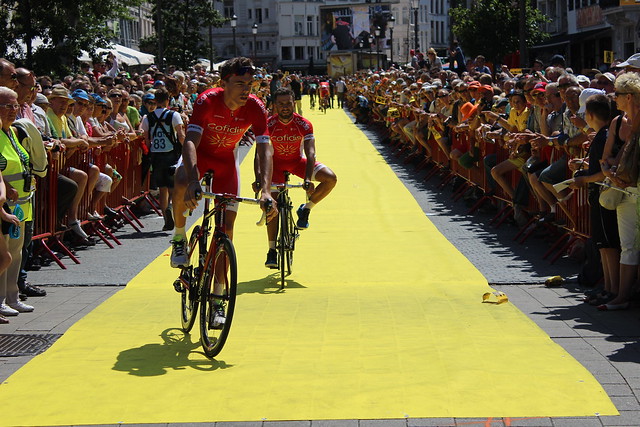
The cyclists ride at breakneck speeds whilst all around them there is ordered chaos; mechanic’s cars, radio cars, official cars and of course the infamous publicity caravan.  Spectators waive their picnics from the roadside as the riders tear past.  Boozey kids run alongside, shouting and jumping up and down.  More than a few crowd members get perilously close in the quest for a perfect snapshot to share with friends.  I took a ride in the Tour de France, and here’s what it’s like to be right in the middle of the world’s most famous cycling race.

Screen Shot 2015-07-06 at 19.46.17

The summers of my youth were always filled with the Tour de France, enjoyed by the whole family as much for the lingering shots of magnificent French scenery as for the riding itself.  We cheered on Greg Lemond and talked endlessly about Lance Armstrong as though he were some kind of cycling superman.  Looking back it seems like a cycling age of innocence, but I loved all the poetry and drama of a journey around a nation by bike. Not just a journey, but a race no less.

This was all before talk of drugs, “enabling” Doctors, self-administered transfusions and blood bags in the hotel room fridge.  Doping cast a deep stain on professional cycling, and it was a long time before I allowed myself to get back in to bike racing.  It’s all the fault of Mark Cavendish, really.  His technical prowess and sheer bravura meant I’d find myself tuning in for the sprints again. Then came Sir Bradley Wiggins.  A Brit winning the tour was the stuff of dreams when I was a kid, but then it actually happened.  Seeing young rider Simon Yates power to the top of Hay Tor during the Tour of Britain in 2013 meant I was roadside - along with about a million other people - to cheer him on when the Tour de France visited our shores last year.


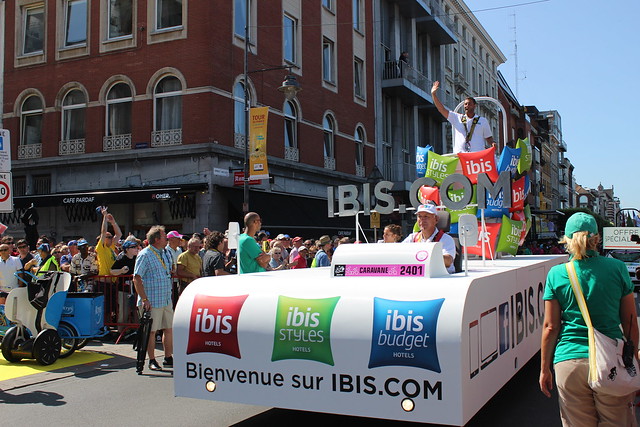
So when official Tour partner Ibis Hotels got in touch asking if I’d be interested in spending the day right in the middle of the race, they didn’t have to ask twice.

IMG_4948
IMG_4951
IMG_4916

The route from Antwerp to Huy was one of the first ‘real’ stages after the ceremony of the Grand Depart in Utrecht (a time trial) and a flat spin across the green fields of Holland.  With Quintana, Contador, Nibali and of course Chris Froome all keen to prove their metal in the initial stages there was plenty of scope for pushing, shoving and hard racing from the off - and the first real uphill finish; the short and steep Mur de Huy.  Both Froome and Cavendish were out of the 2014 Tour within the initial 5 stages, so there was lots to prove.

Going to spectate at the Tour is a funny business.  You’ll stand on a dusty roadside for many hours, and the whole thing flashes past you in a matter of minutes.  The cyclists themselves pass in mere seconds.  Being stuck in the middle of it all gave me a totally different perspective.  The first thing you notice is the speed at which the entire convoy clips along.  These boys - all 198 of them - don’t hang around.  And somewhat paradoxically for cycling the centre of the convoy is a noisy place.  There’s no elysian wheeling through the countryside here - right behind the cyclists are roaring mechanic’s cars, powerful Police motorbikes with sirens, commissaires hurriedly jabbering on their radios, helicopters and not to mention the crowds.  Despite the tumult, they do a great job of cheering and shouting at the riders and its surprising how much of what they say is legible.  Chris Froome must hear people telling him to cheer up all of the time.


IMG_4931

Not all of the drama in the peloton takes place at the front of the bunch, either.  Domestiques - the worker bees of the Tour - are always falling back to pick up supplies from their team cars (themselves zipping along at a steady 40kph or so) and relaying it forward to their team mates.  Bidons are hung out of car windows and you watch as the riders grab hold, perhaps for a second more than is sportsmanlike.  The team crew and the cyclists amiably chat as though riding next to a tonne of car moving at speed with a man inside shouting at you is the most natural thing in the world.  No wonder Britain is doing so well in pro cycling these days.

And what of the Brits?  There’s Froome of course, and Cavendish who’ll be relishing the absence of young German sprinter Marcel Kittel this year.  There’s eight other British names - compared to last year’s four - and this when well-known names like Wiggins and David Millar are past their peloton prime and not in the Tour.  Ian Stannard will be working hard to pull Chris Froome safely across the cobbled sections tomorrow, whilst hour-record-grabbing rider Alex Dowsett will be looking for a good ride after fracturing his collarbone earlier this year.  Geraint Thomas, Luke Rowe and Peter Kennaugh will be riding for Team Sky under the tutorship of Sir David Brailsford, whilst the 22-year-old Yates twins - Simon and Adam - are racing with Australian team Orica-GreenEDGE and are the riders I’ll be watching most closely.  Steve Cummings, riding aged 34, will be in a lead support role in his team MTN-Qhubeka.  Surely a golden age of British pro cycling if ever there was one?


IMG_4977
IMG_4919
IMG_5009

Along the route, entire communities find themselves making the most of an enforced day off.  Their streets, no longer enthral to the motor car, are closed down and become occupied by people again.  Kids chalk drawings on to the tarmac.  Families put out picnic tables and share food with friends and neighbours. In Tienan we saw a Belgian oompah band keeping a whole village entertained.  There’s a certain holiday atmosphere which, coupled with sunshine, makes for a wonderful day out.

Today’s stage raced along at incredible speed.  With nerves in plentiful supply and lead riders keen to establish their position, a crash seemed almost inevitable.  When the crash came, with about 60km still to go, it was a big one, leading the race director to temporarily suspend the Tour whilst medical staff dealt with a multitude of serous injuries.  Yesterday’s Yellow Jersey winner, Fabian Cancellara, completed today’s stage but has now withdrawn from the Tour after it became apparent he’d broken pieces of his back.  White jersey-wearer and young hopeful Tom Dumoulin is also out of the rest of the Tour.  Cycling is a tough sport.


IMG_5068
IMG_5164

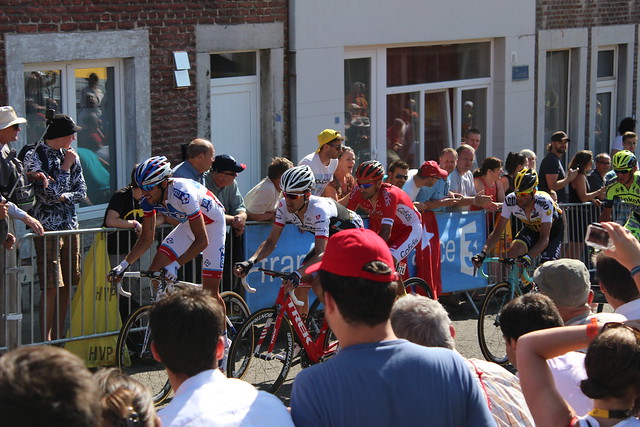
The sheer scale of the entire Tour operation becomes apparent at the finish line when you finally see all those riders, all those support vehicles and all those bikes in the one place.  It’s like a happy cycling chaos, with riders being ushered in to trailers, pursued by journalists, fans, erstwhile bike bloggers and doping control.  Masseurs swing in to action, whilst stage host Mayors beam from the podium for the cameras.  I can understand why Ibis loves supporting the Tour de France - all those riders, team directors and hangers on (not to mention the spectators) have to stay somewhere. Indeed, some 1,500 hotel room beds are reserved every night of the Tour just for organisers and teams.


IMG_5115
Screen Shot 2015-07-06 at 19.45.34

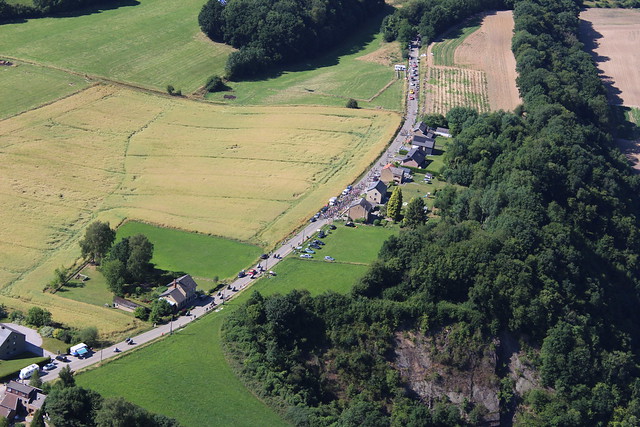
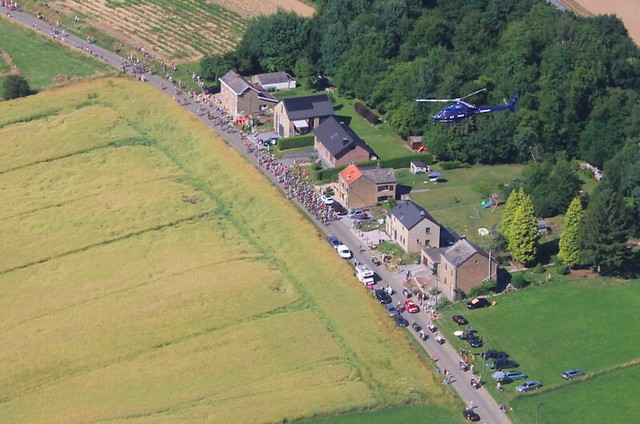
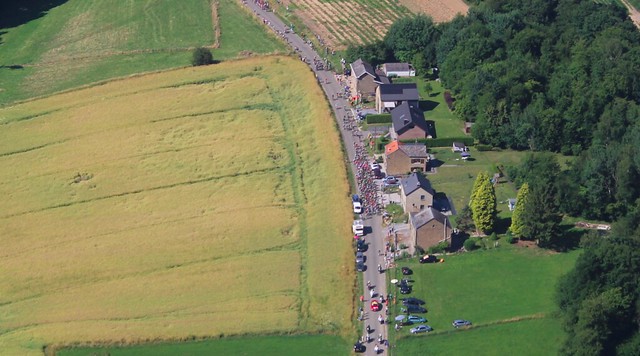
Ibis, who have been putting me up in their super comfortable hotels here in Belgium (I love their specially designed Sweet Beds and have been sleeping like a baby throughout my trip) decided that it wasn’t enough for a cycle racing fan to be allowed in to the thick of the action and had one final surprise in store for me; a transfer to a helicopter about 20kms out from the finish line to watch the peloton from up on high.  Watching the bunch snake its way around corners and up hills through the spectacular, green countryside is a memory that will stay with me forever, and I feel exceptionally lucky to have had such an opportunity.  Thank you, Ibis, for your support of the Tour, for such a welcoming stay and for an incredible day of cycling I’ll never forget!


IMG_5156 

Share |

Everyone cycles in Antwerp (who knew?!)


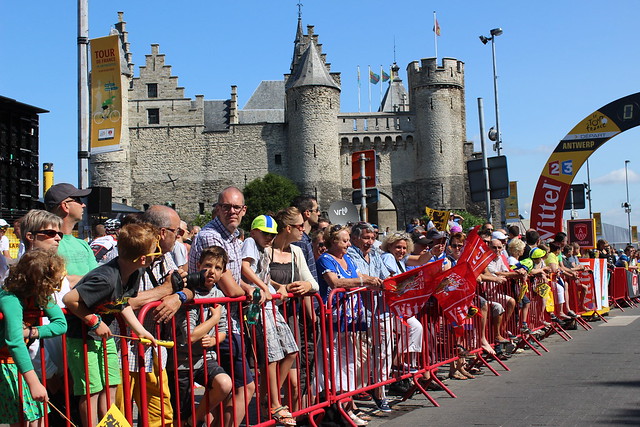
I'm in Antwerp, Belgium, which will host stage 3 of the 2015 Tour de France tomorrow.  I'm here for the Tour (follow my Twitter feed for live updates tomorrow) but hadn't appreciated what a great cycling city Antwerp is.

IMG_4804

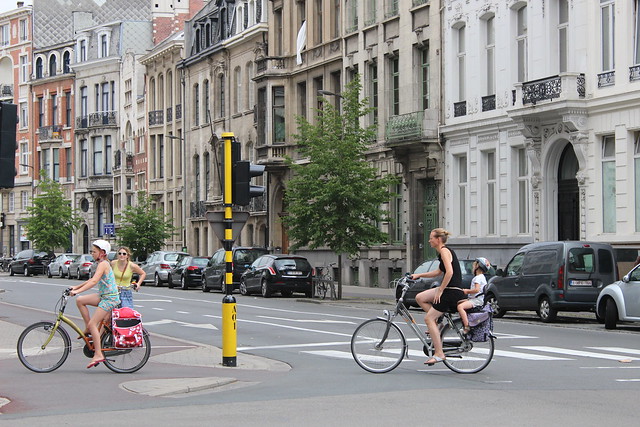
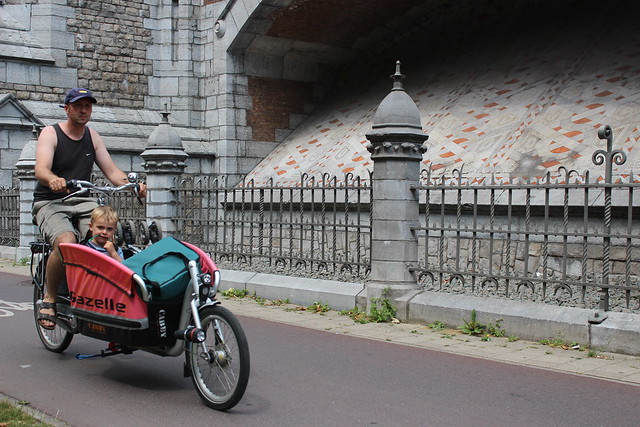
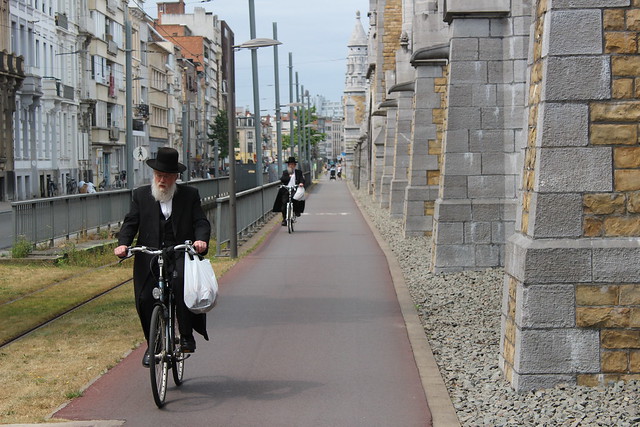
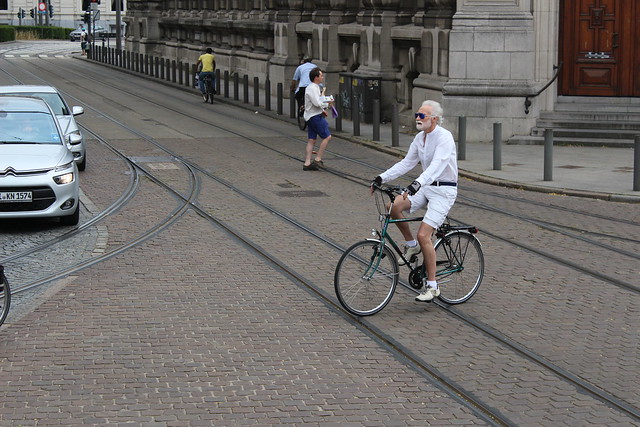
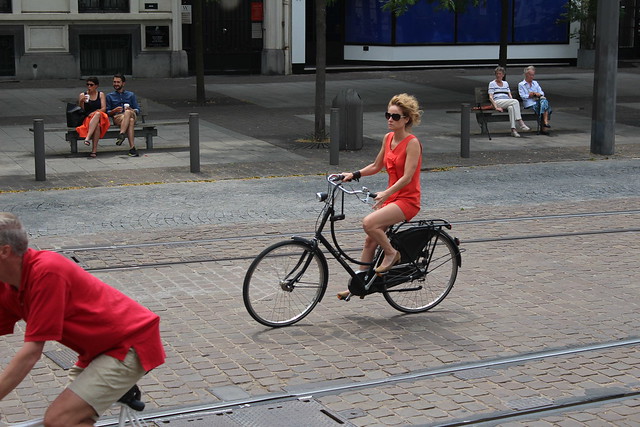
Home to about a million people its Belgium's most populous city, blessed with a compact historic core which is criss-crossed by a web of tram lines and very good cycling infrastructure.  There's tonnes of Tour fans in town, and roadies were out in force riding the route ahead of tomorrow's stage, but I also saw lots of just about everybody else riding a bike as well.

As you'd expect, cyclists share with other traffic on small and quiet roads here, but where volumes or speeds of cars are high the bikes are given their own space.  And I was glad to see there was plenty of new cycling infrastructure in place and that it was well maintained; always a sure sign that a city cares for its cyclists.

IMG_4877
IMG_4797
IMG_4882

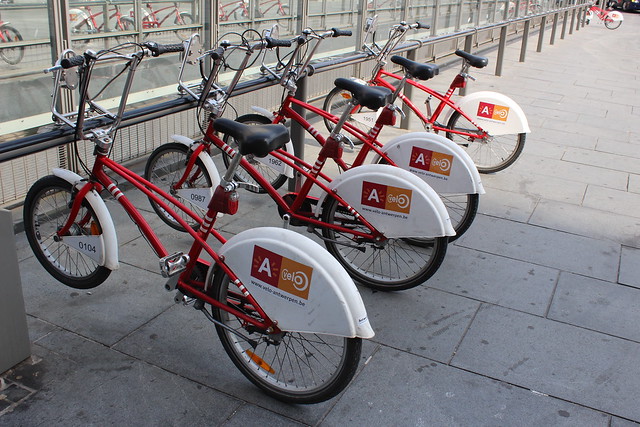
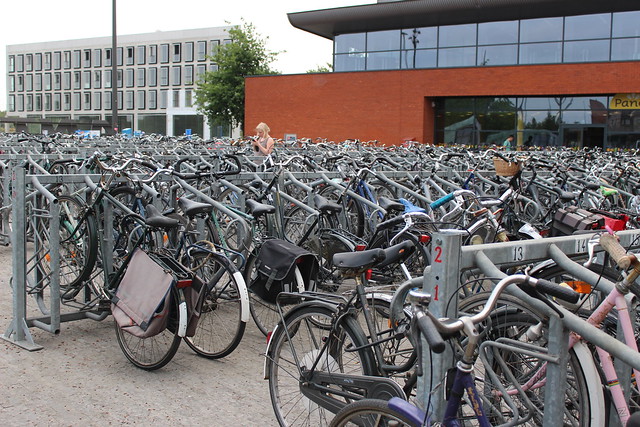
From the moment you step off the high speed train at Antwerp Centraal (and oh my goodness me, train fans, what a station it is) the fact that you're in a cycling city is apparent - deep in the bowels of the station there's acres of secure bicycle parking, a mechanic's workshop and a bike hire station. There's a suite of city bike share schemes - depending on how long you need a bike for - but if you're just visiting I recommend Fietshaven's Yellow Bike scheme, where you can rent a fantastic bike for a full 24 hours for just €13.

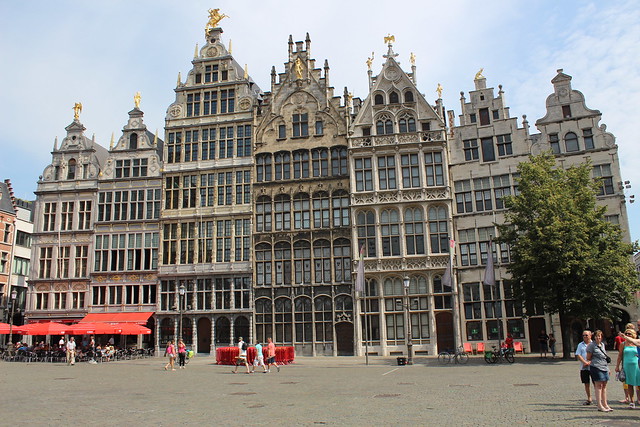
It was great to see the beautiful merchant's houses in the bike and pedestrian-friendly city centre.  Cyclists are exempt from having to follow most one-way streets here, and bike parking abounds. But it is not just in the old town that the city has been thinking about bikes.  There were acres of heavily-used bike parking outside the nearly-new Berchem Station, and smooth, wide brand-new bike tracks to get you there. 

IMG_4886
IMG_4885

Beneath the river Scheldt, the 1933 Saint Anne's tunnel accommodates people on bike and foot, and allows you to take your bike down the original wooden escalators before a leisurely ride beneath the river with excellent acoustics!

IMG_4871
IMG_4910
IMG_4903

I found drivers to be courteous and interaction between riders and cars seemed friendly. What's more I saw cyclists of all ages out enjoying a summer's Sunday ride.  Indeed, the leisurely cycle track that follows the railway south out of the city is so popular it could well do with being made even wider - that's what we call in cycle planning circles "a nice problem to have".

IMG_4854
IMG_4858

Antwerp had never been on my list of places to visit before. I knew it was here, of course, and that it was really just a short trip by train from London.  I had a vague idea that it was famous for diamonds, and shipping, but that was about it.  Well, more fool me.  Antwerp punches above its weight; both as a cycling city and as a destination in its own right.  I couldn't think of a nicer weekend away than riding around here by bike.


For more info on cycling in Antwerp go to Visit Antwerp.
Check LeTour.com for a profile of tomorrow's stage departing from Antwerp.
You can get to Antwerp via the Eurostar in about two hours, with tickets from £80.

Share |